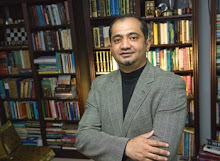
Conference IV: Senator Barak Obama and his transition team meet with American interests group to discuss what role the U.S. would play in the peace process and after the process. President, Secretary of State, National Security Advisor, Leader of AIPAC, Leader of Arab-American Institute, Leader of Christian Zionist Movements, Palestinian Diasporas representative, Churches supporting Palestinian cause, J-Street participate.
Please list who all participated in the conference and a brief summary of what was discussed and concluded at the event.

Subscribe to:
Post Comments (Atom)
3 comments:
Statement of Dr. Clifton Kirkpatrick, former Stated Clerk of the General Assembly of the Presbyterian Church in the United States.
At our 2004 meeting, the General Assembly of the Presbyterian Church in the United States, in consultation with the socially responsible investment committee of the Assembly, looked closely at our church’s $8 billion investment portfolio.
Acting on the Christian imperative to stand on the side of the oppressed throughout the world, out of a deep frustration at the current policies of Israel and those of our own government, and because of the centrality of the lands of both Israel and Palestine in our religious history, we made a decision. That decision was to initiate a process of phased, selective divestment from those U.S. multinational corporations that provide services to or for use by the Israeli police or military to support and maintain the occupation. We further identified as problematic those corporations that provided products, services or technologies of particular strategic importance to the support and maintenance of the occupation and those which provide products and services, including financial services, for the establishment, expansion or maintenance of Israeli settlements on occupied land.
It was our contention that the “security fence” being constructed by Israel on land that is internationally recognized as belonging to the future state of Palestine is counterproductive to the cause of peace. In some places, this “security fence” not only separates Israelis from Palestinians, but also separates Palestinians from each other and from their fields and farms. We further believed that Israeli settlements currently built or being built on that land can have no justification. To build these settlements, the Israeli government confiscates land in violation of international law and then escalates its military presence for settlement security. Finally, we object to the fact that, in the processes of building both fences and settlements, centuries old olive trees, on which Palestinians have depended for their very livelihood, are being deliberately uprooted and destroyed.
Because literally decades of statements have done little to effect change, we saw the threat of phased selective divestment as applying another kind of pressure. The Presbyterian Church does not, however, act impetuously. We first identified four corporations, specifically Motorola, Caterpillar, ITT Industries and United Technologies, as firms in which we have investments and which also support the practices we identified. We planned to meet with their leaders to try to persuade them to change corporate behavior. A further step we felt we might take would be to file shareholder resolutions, a public step to force discussion and decision on the floor of annual meetings. Actual divestment is always our last resort, sought only if and when members of the General Assembly are persuaded that a company chooses to further fuel the conflict rather than work for peace in the region.
We have been asked why we targeted only corporations that provide services to Israel for divestment. In fact, Presbyterians regularly engage corporations all over the world on human rights issues. Again, divestment is a last resort option should corporations be unwilling to use our resources in ways that promote peace with justice. In the past, when engagement through conversation and shareholder action has failed, divestment has been necessary as a matter of conscience. This tool has been used with companies operating in South Africa and Sudan, as well as with U.S. corporations involved in military production and environmental pollution.
The Presbyterian General Assembly resolution sparked discussion and, I believe, needless concern, particularly among Jewish groups. The nuances of the divestment process were lost on many critics, even including some of our own pensioners and investors. Major Jewish organizations vilified the action and began a campaign to pressure the next General Assembly to rescind the divestment decision. Panicked by parallels to the successful campaign to divest in South Africa in order to bring down that country’s apartheid system, at least nine Jewish groups are now working to preempt Israel divestment decisions by other churches. Sadly, in my opinion, the 2006 General Assembly of the Presbyterian Church also changed course, voting only to “invest in peaceful pursuits.”
Due solely to my age and declining health, as well as my sincere wish to spend more time with my own family, I have resigned my position as Stated Clerk of the General Assembly of the Presbyterian Church. Nevertheless, I continue to pray for the guidance and blessings of the Creator upon that body.
It is indeed a very exciting day that the United States has a new president and a African American president at that, a truly historic moment.
We in Qatar believe that the American people have sent a great message to the rest of the world that change is coming and it’s for the better. We only hope that President Obama will have a vested interested in peace in the region as we have, especially in the Palestinian Israeli conflict.
For some examples we have had trade relations with Israel since 1996. During 2008 we visited Israel and Israel has visited us. Even though we has good relations with Hamas and Hezbollah, Israel has agreed to hold talks and has met with us in the UN as well. Qatar has tried to be a sounding board for the situation in the past and will continue to try and bring a peaceful solution in the future.
It is in this respect that we are excited to have some new leadership in the role of a country which in the past has taken great interest in the conflict but has had other qualms as of recently. Though we are not sure of the extent of policy change, we do have higher hopes than in some time and with good reason. Historical elections can call for historic times and we would be very pleased to help in any way possible in the aid of a historic solution.
Statement of James Zogby, of the Arab-American Institute.
I see many problems in American foreign policy in the Middle East. The past seven years have done the peaceful resolution process of Israel and Palestine a great disservice. George Bush entered office with the opportunity to continue the process of creating two states, however, his administration’s ideology and pressures from lobbyists destroyed any possibility of this. The administration has been characterized by neglect and ignorance of the realities of the situation there. The 2007 summit he called at Annapolis, which was expected to be a revived proposal for reaching a solution, proved to be nothing more than an unplanned meeting which accomplished nothing.
The Palestinian situation has, and continues to, deteriorate. Extremism on either side has increased, and Palestinians have become increasingly divided with Hamas controlling the Gaza Strip and Israel occupying the West Bank.
I strongly disagree with the way American policy is built based on the influence of powerful domestic lobby’s. Not only have American policy makers been uniformed regarding the demographics and cultural differences of the region, the pressure of the American Israel Public Affairs Committee, AIPAC, on Middle Eastern policy has badly skewed the way conflict is handled there.
Barack Obama, our president-elect, has outlined his list of foreign policy priorities, beginning with the removal of troops from Iraq and putting them in Afghanistan, starting a set of talks with Iran, and then the Israeli-Palestinian conflict. Although I think that peace there is necessary for stability in the region and that it should be a bigger priority, with his charismatic diplomacy, Obama may be able to more effectively negotiate conditions and finally reach a settlement when he accomplishes his more pressing issues. Howard Friedman, the leader of AIPAC, has made it clear that Israel has no intentions of making the first moves towards a peaceful solution and will not give up land or concede to negotiations until a very specific set of criteria are met. This is why the United States needs to take the initiative.
Obama has characteristics that separate him from his predecessor. While he is committed to the security of Israel, he does not have the same kind of unconditional support that we have seen before. He recognizes the suffering and abuse that has characterized life for Palestinians, has a comprehensive understanding of the region, and wants to proactively solve the problems there.
Obama will need to continually balance the strength and force of the Israeli lobby, a feat that will be made easier by the new, growing presence of J-Street. J-Street offers a moderate Jewish point of view and strongly advocates a two-state solution, agreeing that delay is only making the situation in Palestine worse. Peace in the Middle East is critical to the security of all parties involved, as was discussed at a meeting I attended with the President, AIPAC, and J-Street, and needs to be accelerated. J-Street makes an honest dialogue about how to best achieve these goals much easier for Obama to facilitate.
I believe that a two-state solution and active diplomacy from all parties is necessary to avoiding and overcoming impediments through out negotiations. This will lead to the creation of two sovereign, independent, democratic states. Israel and Palestine will have full recognition of each other’s borders, while the final status of Jerusalem will need to be negotiated between the two states with the constructive support of the United States. The damage that has been done is the reality that is being faced by the new administration, whose responsibility it is to now reach a final ending to this brutal conflict.
Post a Comment